
A timber clad gate is a metal structural frame with timber panels fixed to it, the most reliable way to get a genuine timber look on a large or automated gate without the sag and swelling that plague full-timber leaves. The trade-off is real: you need to think about timber species, corrosion between metal and treated wood, and total leaf weight before a motor goes anywhere near it.
TL;DR:
- Using quarter-sawn hardwoods like spotted gum or merbau extends the lifespan of external timber cladding compared to softer, plain-sawn timber.
- Galvanised or powder-coated steel frames are best for corrosion resistance, especially when timber contacts bare or lightly coated metal surfaces.
- Proper isolation barriers, adjustable fasteners, and airflow gaps are essential to prevent moisture buildup and ensure the gate’s longevity.
- Accurate motor sizing must account for total weight, including cladding and wind load, rather than just gate dimensions, to prevent early failure.
- Regular maintenance, such as sealing end grains and re-coating, is crucial to sustain finish quality and avoid fastener rust and hinge issues over time.
Table of Contents
- When does a timber clad gate make sense?
- Which timbers and frame metals actually last outside?
- How do you actually fix timber to a metal frame?
- Getting the sizing and automation right
- Protecting the finish for the long haul
- What does a timber clad gate cost, and who should build it?
- What most gate quotes get wrong
- Get a timber clad gate built for your property
- Sources
When does a timber clad gate make sense?
Most fabricators build clad gates on a welded steel or aluminium frame, then fix timber boards or slats across the face. It works for swing gates, sliding gates, single leaves and double leaves alike, because the frame carries the structural load while the timber does the visual work.
Clad construction earns its keep on wider openings and anything going onto a motor. A full timber leaf over several metres wide starts to twist under its own weight, and that twist is exactly what wrecks hinges and confuses gate sensors. A steel frame resists that torsion in a way solid timber never will.
Compare the three options honestly. A full timber gate looks warm and traditional but moves with the seasons and struggles on wide spans. A full metal gate is strong and low-maintenance but can feel cold for a residential driveway. Clad construction splits the difference: metal strength, timber warmth, and a leaf that automates cleanly.
Which timbers and frame metals actually last outside?
Not every timber sold at the yard belongs on an external gate. Hardwoods like spotted gum, blackbutt and merbau handle Australian weather well, and Western Red Cedar is a lighter, easier-to-work option with decent natural rot resistance, though it's softer and needs more careful fixing. Pine can work if it's properly treated, but it moves more and rots faster once the treatment wears thin.
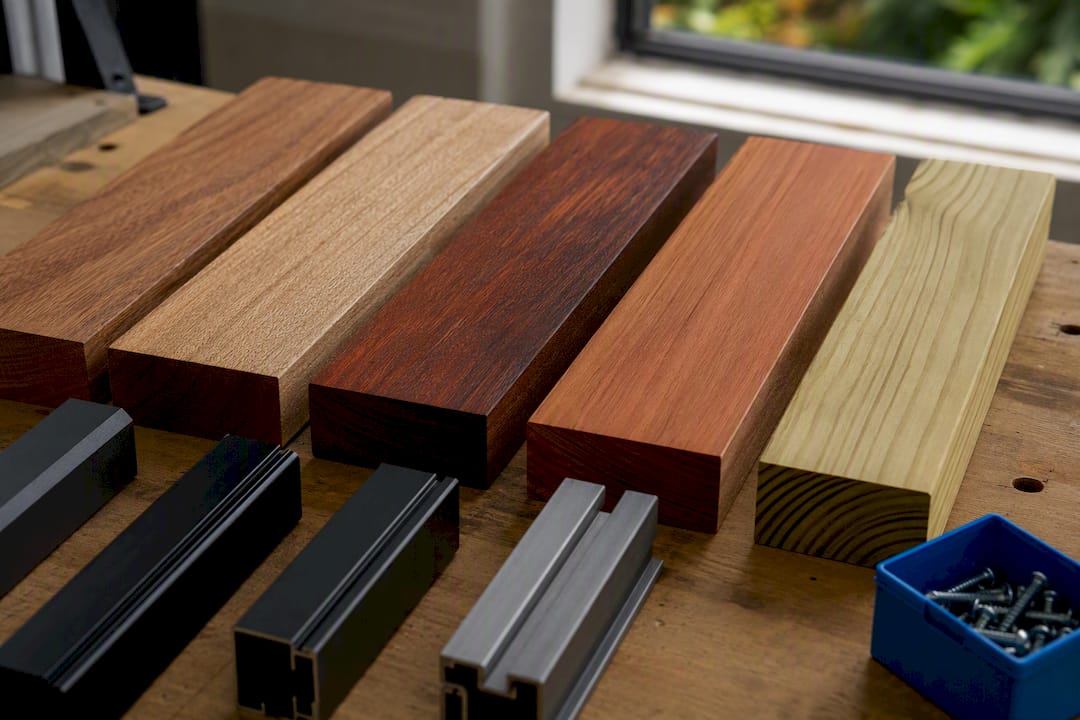
Grade matters as much as species. Quarter-sawn boards move less across their width than plain-sawn boards cut from the same log, which means fewer cupping and splitting headaches years down the track. Pay the premium for quarter-sawn stock on wider boards.
On the frame side:
- Galvanised steel is the standard choice for structural strength and corrosion resistance in an outdoor frame.
- Powdercoated galvanised steel adds a durable colour finish over that protection, which fabricators increasingly treat as the default combination for custom wrought iron gate frames.
- Aluminium suits lighter leaves and coastal sites where salt air accelerates steel corrosion, though it needs careful design for heavier cladding loads.
- Stainless steel fixings cost more upfront but avoid the rust bleed that ruins a timber finish within a season.
The corrosion issue that catches people out isn't the frame itself, it's the timber touching it. Builders on the Bunnings Workshop forum report that copper-based timber treatments can accelerate corrosion where they contact bare or lightly coated steel, leaving rust streaks down the face of the cladding within a year or two.
How do you actually fix timber to a metal frame?
Getting this step wrong is the single biggest cause of early gate failures, worse than choosing the wrong timber species.
- Isolate the contact points. A thin polymer or bitumen barrier between treated timber and steel stops the chemical reaction that drives fastener corrosion, a fix flagged repeatedly by builders on the Bunnings Workshop thread.
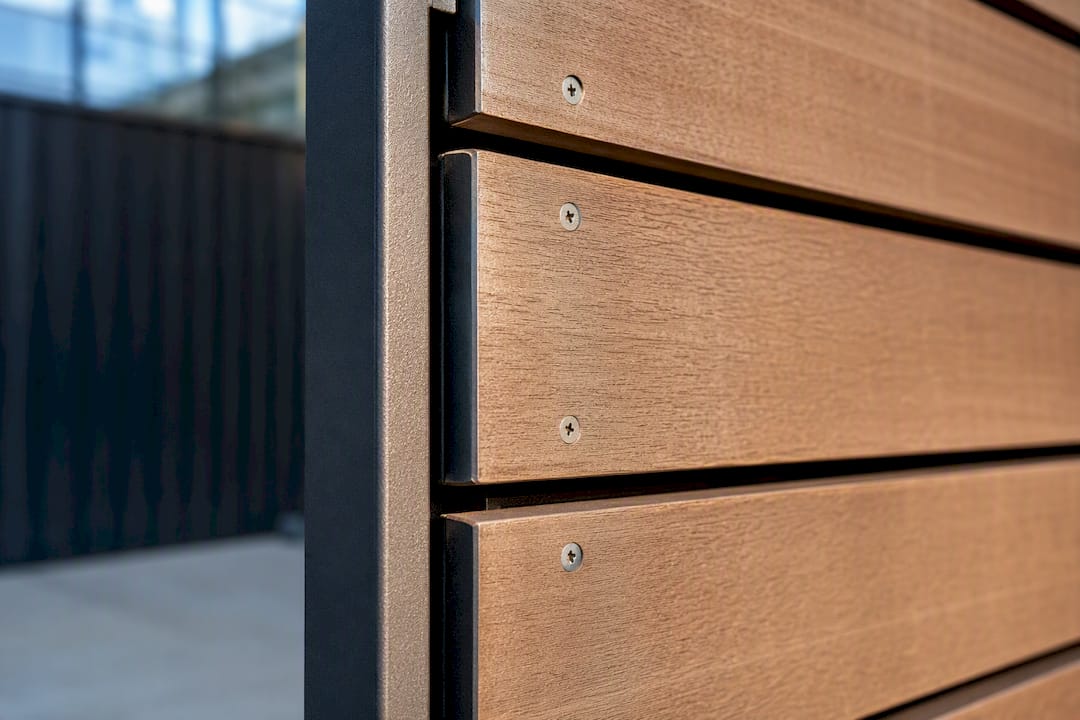
- Choose the right fastener for the job. Through-bolts with nylon or rubber sleeves suit heavier boards; self-drilling screws with isolation washers work well for lighter slats.
- Build in movement allowance. Slotted connections or oversized pilot holes let boards expand and contract with humidity without splitting.
- Float the boards where practical. Fixing one end firmly and letting the other ride in a slot, similar to the way Mitre10's timber gate guide describes for solid gates, absorbs seasonal swelling without buckling the frame.
- Space boards for airflow. A 3 to 5mm gap between boards stops water pooling and lets both sides dry out after rain.
- Reinforce the hinge stiles. Braced frame designs with welded gussets at the hinge points spread the load rather than concentrating it on a few bolts.
Breadboard ends, a timber strip fixed across the grain at the top and bottom of a panel, are a traditional trick worth borrowing here too. They stop wide boards cupping and give you a clean edge to work with.
Pro Tip: Never fix cladding tight to the frame edge to edge. Leave a small reveal around the perimeter of each board so trapped moisture can escape instead of sitting against the steel.
Getting the sizing and automation right
Cladding adds weight, and weight changes everything downstream: hinge selection, post engineering, wind load, and which motor class will actually cope.
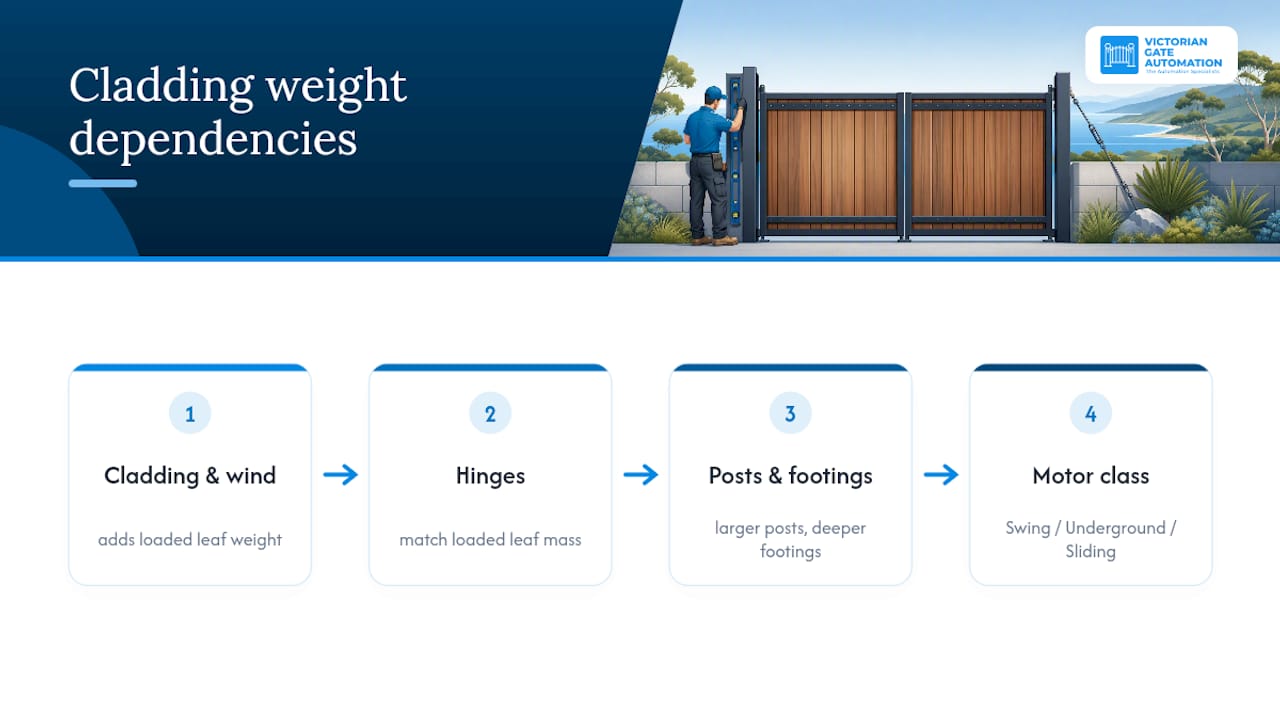
Hinge sizing has to match the loaded weight of the finished leaf, including cladding and the wind load it catches because it's a solid surface instead of open bars. Hoover Fence's gate plans stress matching hinge rating to anticipated leaf mass rather than guessing, and that advice matters more on a clad gate than almost anywhere else, because solid timber acts like a sail in strong wind.
Swing arm motors suit most residential clad swing gates up to moderate weights. Underground motors handle heavier leaves discreetly but need deeper footings. Sliding gates carrying full cladding usually need a heavier-duty track motor than an equivalent open-design gate of the same dimensions.
If a leaf is heavier or wider than a standard residential opening, larger posts, deeper concrete footings or even counterweighting can be part of the answer. The practical rule: if you're not certain the post and footing will handle the loaded weight and wind exposure, get a site check from an automation specialist before you order a motor.
Protecting the finish for the long haul
A clad gate is only as good as its ongoing care, and most failures trace back to skipped maintenance rather than bad materials.
- Oil-based penetrating finishes suit hardwoods that need to breathe; film-forming paints and stains work better over primed softwoods.
- Seal end grain and cut edges before installation, since untreated end grain absorbs water many times faster than a flat face.
- Re-coat regularly depending on sun and rain exposure, and check more often on north or west-facing gates.
- Inspect fasteners for rust bleed periodically, particularly where timber meets steel.
- Check hinge wear and any new gaps or binding as boards move with the seasons.
What does a timber clad gate cost, and who should build it?
Cost swings on four things: timber species, frame finish, whether you're automating, and how much site work the footings need. Hardwood cladding and a powdercoated frame sit well above pine and bare galvanising, and automation adds motor, wiring and commissioning cost on top of fabrication.
An experienced DIYer with welding skills can reasonably build a simple pedestrian gate frame. Wide driveway gates, anything automated, or any site with tricky footings or wind exposure calls for a fabricator.
Before accepting a quote, ask:
- What warranty covers the frame, the cladding fixings and the motor separately?
- What corrosion prevention is built into the fastener and finish specification?
- How was the motor sized against the actual loaded weight of this gate?
- What's the lead time from deposit to installation?
- Does the quote include a site survey, or is it a desktop estimate?
What most gate quotes get wrong
Most gate failures trace back to two decisions made in the first week of a project, not workmanship years later. The first is skipping the isolation barrier between treated timber and the frame because it feels like an unnecessary extra step. The second is sizing the motor off the gate's dimensions instead of its actual loaded weight once cladding, hardware and wind exposure are factored in.
Clients also underestimate how much a proper handover matters. A gate that's been commissioned properly comes with documented motor settings, a clear maintenance schedule and someone who'll answer the phone if a hinge starts binding six months later. That's the difference between a gate that lasts fifteen years and one that's back on the tools by year three, and it's the standard we hold ourselves to on every project across Victoria.
— Rhys
Get a timber clad gate built for your property
Some fabricators build timber clad gates from the frame up rather than fitting timber to an off-the-shelf structure, which means the frame, hinges and motor are all sized to your actual opening and wind exposure from day one, not adjusted after the fact.

A typical site visit covers post and footing condition, wind exposure, leaf swing clearance and the automation options that suit your driveway, all the details that determine whether a clad gate lasts fifteen years or needs rework within three. Experienced gate fabricators have spent decades fabricating custom gates and fencing across Victoria, using locally sourced timber and metal matched to each site rather than a standard catalogue spec.
If you're weighing up a residential gate project or want the leaf automation-ready from the outset, get a site survey and quote through the automation team before you commit to a design.
Sources
- How to build timber gates — Mitre10
- Timber cladding on gate — Bunnings Workshop discussion
- Free DIY wood gate plans — Hoover Fence