
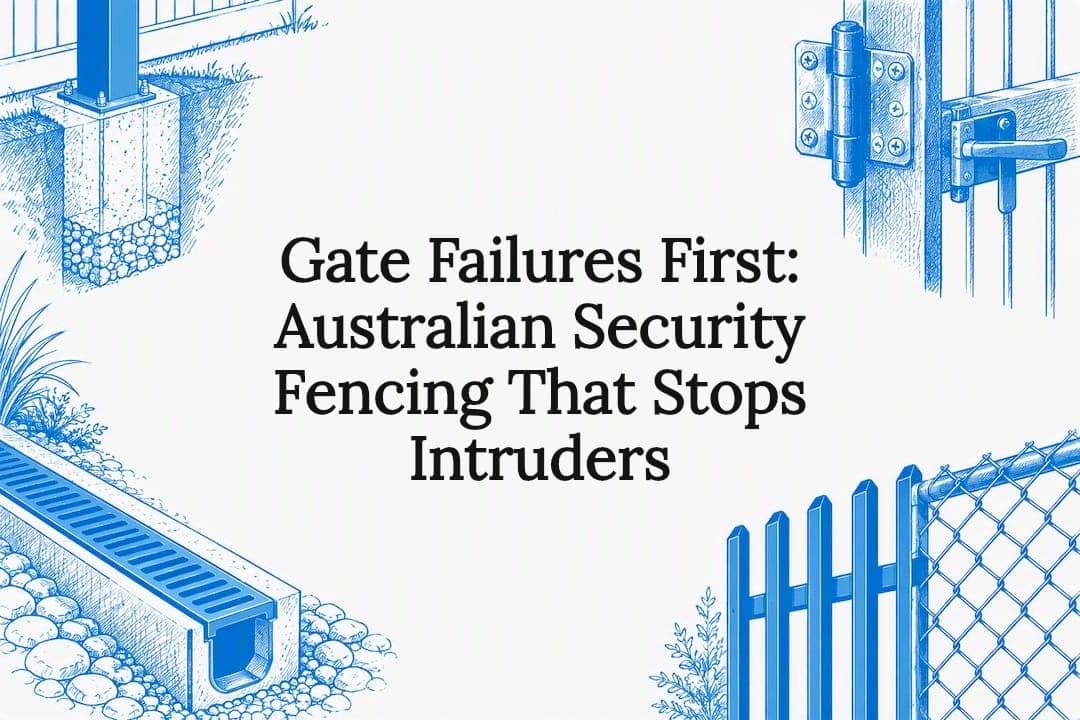
For long, visible boundaries, galvanised chain link is the sensible default. Where anti-climb performance matters, 358 mesh or palisade fencing takes over, and for perimeters carrying real risk, a fence line paired with detection and a hardened gate is what actually holds. Get the gate wrong and none of it counts.
TL;DR:
- Chain link fences are suitable for marking boundaries but require proper tensioning and mesh size reduction to serve as effective deterrents.
- 358 mesh offers stronger anti-climb features with smaller apertures, making it ideal for high-risk sites like data centers and substations.
- Gate design and installation are common failure points, necessitating careful specification of post embedment, lock quality, and tamper protection.
- Coating selection, especially for coastal sites, impacts longevity, with marine-grade options preferred to prevent rust within a few years.
- A thorough threat and risk assessment ensures the chosen fence type and layering method align with actual site vulnerabilities and security needs.
Table of Contents
- Wire and mesh security fencing types
- Palisade and vertical bar fencing: looks matter, so does the detailing
- Timber, slat and acoustic panel fencing: privacy versus visibility
- Electric fencing, taut wire and detection systems
- Gates and access openings: the weakest point in almost every fence
- Materials, coatings and the standards that govern them
- How to choose a security fence: the decision checklist
- What installers actually see on-site
- Why specification beats appearance every time
- Get a security fence built around your actual risk, not a catalogue
- Standards and guidance worth keeping on file
- Sources
- FAQ
Wire and mesh security fencing types
Chain link, welded mesh, and 358 mesh look similar from the road but perform very differently once someone tries to get through them. The differences come down to a handful of specification variables: wire gauge, mesh aperture, tension, and how the fabric attaches to the frame.
Standard chain link is fine for marking a boundary or keeping stock and wandering pedestrians out. It is not, by itself, a security barrier. AS 1725.1 covers chain link security fencing and gates, and the standard makes a point worth remembering: ordinary chain link only becomes a genuine deterrent once you address the details that most quotes skip over.
- Wire diameter and mesh aperture (smaller apertures resist cutting tools and remove footholds)
- Proper tensioning, so the fabric cannot be peeled back or bounced over
- Rail and post spacing that stops the fence sagging under load
- Bottom gap and top toppings, both common entry points if left unspecified
Welded mesh steps up from there. It is rigid, harder to cut cleanly, and doesn't flex the way woven chain link does under an attack. 358 mesh (also called anti-climb mesh, named for its roughly 76mm x 12mm aperture) takes this further again. The small rectangular gaps are deliberately too narrow for a boot toe or gloved fingers, which is why you see it around data centres, substations, schools, and water treatment plants. It costs more than chain link per linear metre and needs a stiffer post arrangement to handle the panel weight, but the maintenance load stays low. Once it's up, it mostly just sits there working.
Palisade and vertical bar fencing: looks matter, so does the detailing
Palisade fencing gives you a visible, formal security statement without the blank-wall feel of a solid barrier. It works well on commercial frontages, schools, and utility compounds where the brief calls for "looks secure and is secure" rather than just one or the other.
The pales themselves matter more than most buyers realise. A rounded or blunt pale top looks tidier but offers less deterrent than a pointed or W-section profile, which resists a boot or gloved hand trying to get purchase. Fixings should be tamper resistant from the attack side, ideally with bolts that can't be removed from outside the line.
- W-section or bow-top pales for genuine climb resistance, not just decoration
- Tamper-proof fixings on the exposed face
- Minimal horizontal rail exposure, since a mid-height rail becomes a ladder rung
- Consistent pale spacing tight enough to stop a body passing through
Vertical bar or ornamental iron fencing sits in similar territory, often chosen where a heritage frontage or a residential property wants a formal look with real backbone. The known weakness on both styles is the base rail and post junction. If it's poorly fixed or under-embedded, a determined attacker can lever the whole panel rather than bother climbing it.
Timber, slat and acoustic panel fencing: privacy versus visibility
Solid timber, composite slat, and acoustic panel fencing solve a different problem: privacy and noise, not detection. That's the trade-off worth understanding before you commit. A solid line blocks a would-be intruder's view into the property, but it also blocks your view out, and it blocks a passing patrol or neighbour from spotting someone loitering at the base of the fence.
For a backyard boundary or noise buffer next to a busy road, that trade makes sense. For a site where early detection matters, a solid fence can work against you. If the boundary also forms part of a swimming pool barrier, be careful: AS 1926.1:2024 sets specific height and gap rules for pool boundaries, and a good-looking privacy panel that doesn't meet those rules is a compliance problem waiting to surface at inspection.
Electric fencing, taut wire and detection systems
Electric wire and taut wire systems are enhancements, not stand-alone fences. A deterrent electric top wire adds a psychological and physical barrier above an existing fence line, while certified electric fence systems (built to relevant electrical safety standards) go further and require proper signage, isolation, and maintenance.
Perimeter intrusion detection systems (PIDS) take this further still, using taut wire tension sensors, buried cable, or fence-mounted vibration sensors linked to CCTV and an alarm panel. Electric and PIDS layers only earn their cost when someone actually responds to the alert; without a monitored response plan, they're just an expensive light show.
Gates and access openings: the weakest point in almost every fence
Gates fail before fences do, almost every time. The usual culprits: undersized posts that flex under repeated use, domestic-grade locks bolted onto a commercial gate, and automation wiring left exposed where it can be cut or bypassed.
Before signing off on any gate, run through these checks with your installer:
- Confirm post embedment depth and footing size match the gate's weight and wind load, not just its width
- Specify a lock rated for the gate's risk level, not whatever the installer had in stock
- Ask how automation cabling and control boxes are protected from tampering
- Check clearances and crash protection so the gate can't be forced off its track
- Set a maintenance schedule for hinges, wheels, and lock mechanisms before they seize or sag
A fence is only as strong as the opening in it. AS 1725.1 treats gates as part of the fencing system for good reason. They're where most break-ins actually happen.
Materials, coatings and the standards that govern them
Three Australian standards do most of the heavy lifting when you're specifying a security fence. Knowing what each one covers saves you from a supplier quietly substituting a cheaper, non-compliant product.
- AS 1725.1 covers chain link security fencing and gates, including construction and installation requirements
- AS 2423 specifies requirements for zinc and zinc/aluminium alloy coated steel wire fencing products, from chain link fabric through to heavy welded mesh
- AS 1926.1:2024 sets swimming pool barrier requirements, which apply as a separate constraint whenever a security fence also forms a pool boundary
Coating choice affects lifespan more than almost any other decision. Hot dip galvanising is the standard baseline; zinc/aluminium coatings and additional powder coating extend service life further, particularly in coastal or high-humidity sites where ordinary galvanising corrodes faster. AS 2423 sets out the coating categories that determine how a fence actually holds up over its working life.
Pro Tip: If your site is within a few kilometres of the coast, ask specifically for a marine-grade coating spec before you accept a quote. The cheaper option almost always shows rust within two or three years.
Get the coating wrong on a coastal site and you're not looking at a cosmetic issue. You're looking at a full fence replacement a decade earlier than budgeted.
How to choose a security fence: the decision checklist
Work through this order, not backwards from a fence style you like the look of.
- Assess the risk first. A proper Threat and Risk Assessment (TRA) should set what the fence needs to do: deter, delay, or deny, according to guidance from the RCMP's security fencing considerations guide
- Match the fence type to that risk level, not to whatever's cheapest per metre
- Specify the gate with the same rigour as the fence line, since it's the part most likely to fail first
- Add detection or layering (a second fence line, bollards, PIDS) only where the risk assessment actually calls for it
When you're talking to a supplier, ask directly: which Australian standards does this product meet, what's the warranty on materials versus workmanship, who handles site drainage and post footings, and what does handover testing look like? Vague answers on any of those are a red flag, as is a quote with no mention of gate specification at all.
On cost and timeline: expect a straightforward chain link boundary to sit at the lower end of the budget with a short install window, palisade or 358 mesh in the middle with more site prep, and layered systems with automation and detection at the top end, both in price and in weeks on site.
What installers actually see on-site
After decades fabricating and installing gates and fencing across Victoria, the pattern repeats: fences don't fail because the panel was wrong, they fail because the footing or drainage was. Post foundations poured too shallow, or sites with poor runoff left untreated, cause more long-term problems than the choice between mesh and palisade ever does.
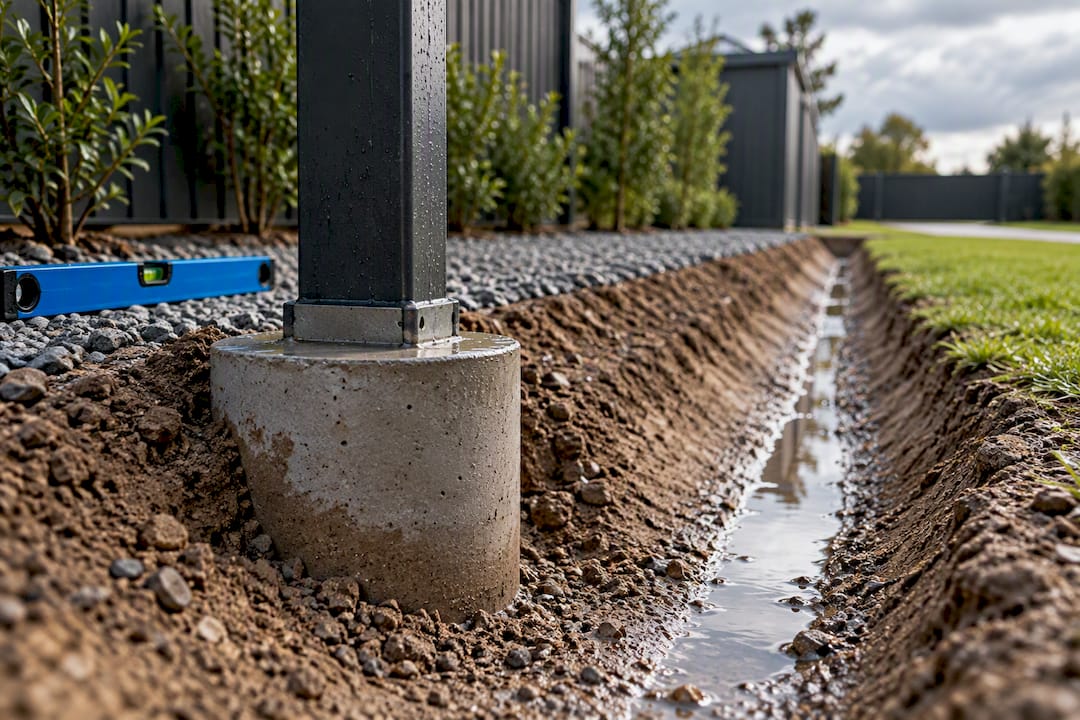
A proper site survey should check ground conditions, drainage, and how automation will integrate with the gate before a single post goes in. Our residential and commercial teams run this checklist on every project, because getting it right the first time is cheaper than fixing it in year two.
Why specification beats appearance every time
The fences that fail are rarely ugly. They're the ones bought on looks, with the gate treated as an afterthought and the footing done to a minimum. Appearance matters most for street-facing residential work; delay and detection matter most for commercial and industrial sites carrying real risk.
Pair a proper threat assessment with a fabricator who'll argue with you about post depth before they argue about pale profile. That's the one that lasts.
— Rhys
Get a security fence built around your actual risk, not a catalogue
A custom gate and fencing provider can spend decades designing and hand-fabricating gates and fencing, often using locally sourced materials rather than off-the-shelf imports. That matters because a custom-built gate and fence line, sized and specified for your exact site and risk level, closes the gaps that a generic panel-and-post kit leaves open.

Whether you're locking down a warehouse perimeter or upgrading a residential boundary, the process starts the same way: a proper site assessment before any steel gets cut. Our commercial and industrial service covers larger sites and automation integration, while wrought iron gates and fencing suits properties wanting a formal look with real strength behind it. Automation and access controls can be added at the same time through our automation service, so the gate and the fence get specified together rather than bolted on separately later. Requesting a design consultation and booking a site survey before committing to a fence type ensures specifications meet needs rather than relying on appearance alone.
Standards and guidance worth keeping on file
Three Australian standards and one international guidance document cover most of what's in this article. AS 1725.1 governs chain link security fencing and gates. AS 2423 covers coated wire fencing products. AS 1926.1:2024 sets pool barrier rules. The RCMP's fencing considerations guide is an international reference, useful for the risk-assessment framework rather than Australian compliance.
Sources
- AS 1926.1:2024 | Standards Australia Store
- GCPSG-009 (2022) Security fencing considerations guide | RCMP
FAQ
What are the five types of physical security barriers?
The main categories are chain link and mesh fencing, welded or 358 anti-climb mesh, palisade or vertical bar fencing, solid privacy fencing, and electric or detection-enhanced systems layered on top of a physical fence. Each suits a different risk level, and gates and access points need to be specified with the same rigour as the fence line itself, as AS 1725.1 makes clear.
What is the best security fence for a house?
For most residential properties, a well-specified palisade or vertical bar fence balances street appeal with genuine deterrence, particularly with tamper-proof fixings and minimal horizontal rail exposure. Wrought iron options through Vicgates' custom fencing service offer that same combination with a more traditional finish.
What type of fence offers both privacy and security?
Acoustic or solid slat panels give privacy but reduce visibility, which can work against early detection of an intruder at the fence line. A better middle ground is often a mid-height solid section topped with anti-climb detailing, keeping some sightlines while still blocking casual view-in from the street.
What are the different fencing styles available?
Styles range from open wire and mesh systems (chain link, welded mesh, 358) through ornamental palisade and vertical bar, to solid timber or slat panels, with electric wire or detection systems layered on any of them where risk demands it. The right style depends on whether the priority is visibility, deterrence, privacy, or a mix of all three.
How much does professional security fencing cost?
Costs vary widely by fence type, site conditions, and gate specification, so current pricing is best confirmed directly through Vicgates' service pages for an accurate quote based on your site. As a general rule, simple chain link sits at the lower end of the budget, while palisade, mesh, and automated gate systems sit progressively higher.