
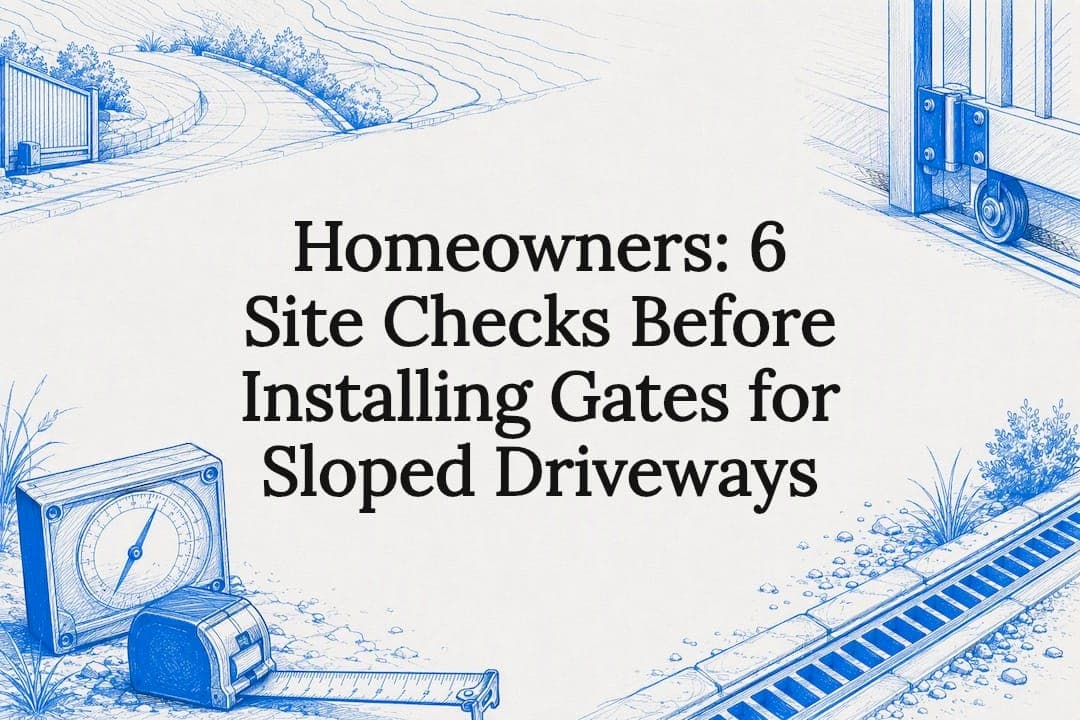
Yes, you can install a gate on a sloped driveway, but the gate type has to match how the slope runs. Sliding gates (track, cantilever or telescopic) solve most slope problems, while swing gates need rising hinges to clear moderate grades. Automation demands correctly sized motors, proper braking and solid foundations, or the whole system wears out fast.
TL;DR:
- Sliding gates are generally the most practical choice for sloped driveways, especially tracked, cantilever, or telescopic types suited to various terrain conditions.
- Proper slope assessment involves measuring the grade percentage and determining whether the slope runs across or along the gate's travel path, influencing gate type selection.
- Reinforced footings and effective drainage are critical to prevent costly issues like shifting or jamming, especially on uneven or soft ground surfaces.
- Automated systems require motors rated for the actual load and slope conditions, with safety features like brakes and sensors rated for the increased momentum experienced downhill.
- A detailed site survey should be performed before installation to specify footing depth, drainage solutions, motor duty cycle, and to ensure the gate design matches the site's unique grade and layout.
Table of Contents
- Gates for sloped driveway sites: which type actually works?
- How steep is too steep? Assessing your slope before you choose
- What motor and safety setup does a sloped gate actually need?
- Foundations and drainage: the part homeowners skip
- Your pre-install checklist: what to nail down before hiring anyone
- What 30 years of sloped installs actually teaches you
- Why site assessment beats gate shopping every time
- Get a proper site assessment for your sloped driveway gate
- Sources
Gates for sloped driveway sites: which type actually works?
Sliding gates are usually the most practical choice for a sloped driveway because they travel horizontally rather than swinging through an arc, sidestepping the ground-clearance issues that plague swing gates on an incline. That's the starting point for nearly every quote you'll get from a competent installer.
Within sliding gates, you've got three real options:
- Tracked sliding gates run along a fixed ground rail. They're cost-effective and strong, but the track needs a stable, well-drained base or it becomes a maintenance headache on uneven ground.
- Cantilever sliding gates have no ground track at all, supported instead by internal rollers and a counterbalanced frame. That makes them well suited to uneven ground or driveways where debris and poor drainage would clog a conventional track.
- Telescopic sliding gates use two or more overlapping panels that stack in front of each other as they open, cutting the run-back space needed by roughly half. Handy when your side clearance is tight and a single sliding leaf just won't fit.
Swing gates still work on slopes, but only with rising hinges fitted, which lift the gate as it opens so the bottom rail clears the ground. It's a workable fix on moderate grades, though it adds mechanical complexity and extra load on the automation, a trade-off worth weighing against a cantilever slider before you commit. Bi-fold gates are rarer on residential slopes; they can work on flat run-up sections but rarely suit a driveway with a continuous grade.
Design-wise, sliding gates lend themselves to clean horizontal styling (slatted steel, wrought iron infill panels), while swing gates with risers still allow the more traditional double-leaf look many homeowners want at the street frontage.
How steep is too steep? Assessing your slope before you choose
Before picking a gate, work out the slope axis: does the ground rise across the gate's line of travel, or along it? This single factor is often the most critical design decision installers make, because a gate that copes fine with a slope running along its length can bind badly if the same grade runs across it. Measuring axis and run-back space before you shop is the difference between a smooth install and a returned quote.
Run through this sequence on-site:
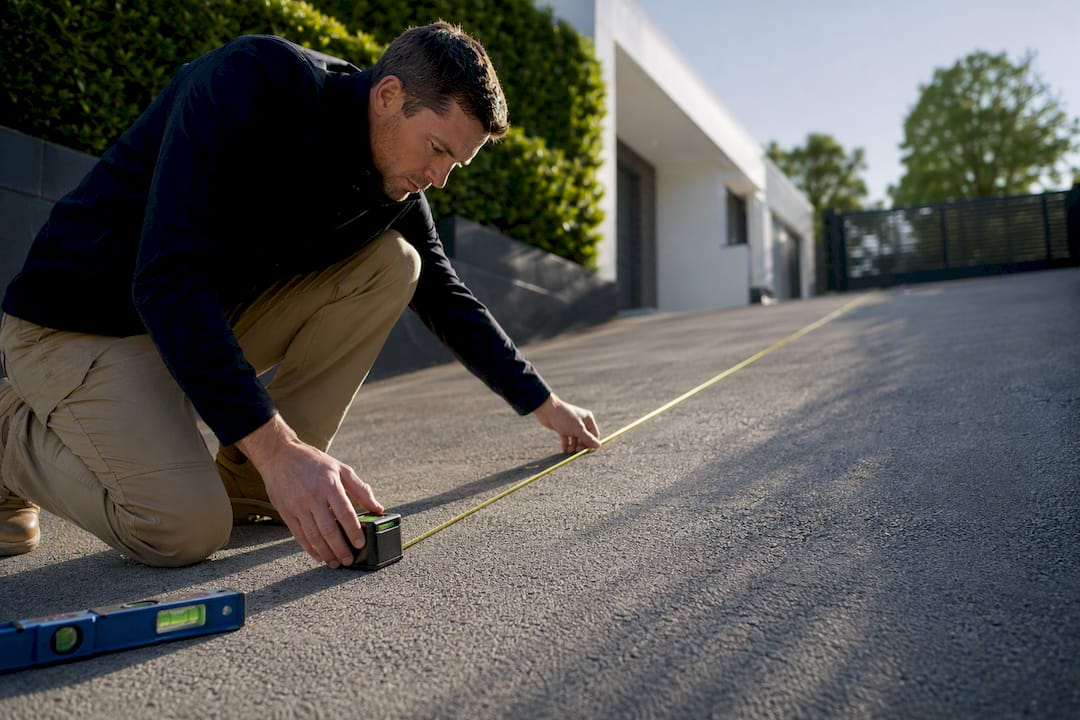
- Mark the gate line and measure the height difference from one end to the other over the gate's full width.
- Calculate grade as a percentage: rise divided by horizontal distance, multiplied by 100. Most installers treat anything under 8-10% as moderate and manageable with rising hinges or a standard slider; anything beyond that starts pushing into cantilever or custom territory.
- Check run-back space on whichever side the gate needs to travel. Measure for fences, garden beds, retaining walls, or services (power pits, water meters) that could block a sliding leaf.
- Inspect the surface: is it compacted gravel, paving, or soft soil? A track wants a firm, drained base; loose or shifting ground favours cantilever.
Pro Tip: Walk the slope with a spirit level and a length of string rather than trusting the eye. Slopes that look "gentle" often measure closer to 12–15% once you actually check them, and that number changes which gate makes sense.
What motor and safety setup does a sloped gate actually need?
Gravity doesn't care about your budget. On a slope, the operator has to fight extra load on the way up and resist runaway acceleration on the way down, and an undersized or flat-rated motor will wear out long before it should. This is where a lot of DIY automation jobs go wrong: the motor spec sheet assumes level ground, and a 10% grade changes the maths considerably.
A few things worth checking before you buy an operator:
- Duty cycle rating. A motor rated for occasional residential use on flat ground may be working at or beyond its limit on even a modest slope, especially with frequent daily use.
- Soft-start and soft-stop. These features ease the gate into motion and bring it to a controlled stop, which matters far more on an incline where momentum builds quickly on the downhill run.
- Mechanical braking. A gate that can freewheel downhill if power cuts out is a genuine safety risk on any grade worth naming. Look for an operator with a built in brake or irreversible gearbox.
- Safety edges and sensors. Slopes increase closing force in one direction, so photo-eyes and pressure-sensitive edges need to be rated for that extra momentum, not just the standard flat-ground spec.
Rack and track alignment matters more here too. A slider that's a few millimetres out of true on flat ground might run fine for years; the same misalignment on a slope accelerates roller wear and throws extra strain on the motor every single cycle. Quality steel rollers with sealed bearings earn their price on an inclined installation.
On power, mains supply suits most continuous-duty sloped installs, since solar systems need enough battery reserve to manage the higher current draw a slope-fighting motor pulls. If your site is off-grid, size the solar setup for worst-case cycles, not average ones. Vicgates' automation and access control work covers exactly this kind of load calculation before a motor gets specified.
Foundations and drainage: the part homeowners skip
Most recurring gate problems on sloped sites trace back to two things: undersized footings and poor drainage, and both are far cheaper to fix before installation than after. Trench drains and reinforced footings are the standard mitigation, and skipping them is the single biggest false economy in a sloped gate build.
- Footings for cantilever posts need to resist both vertical load and the leverage of an unsupported gate leaf, which means deeper, wider, and better reinforced than a comparable flat-ground footing. Heavy wrought iron swing posts on a slope need the same treatment.
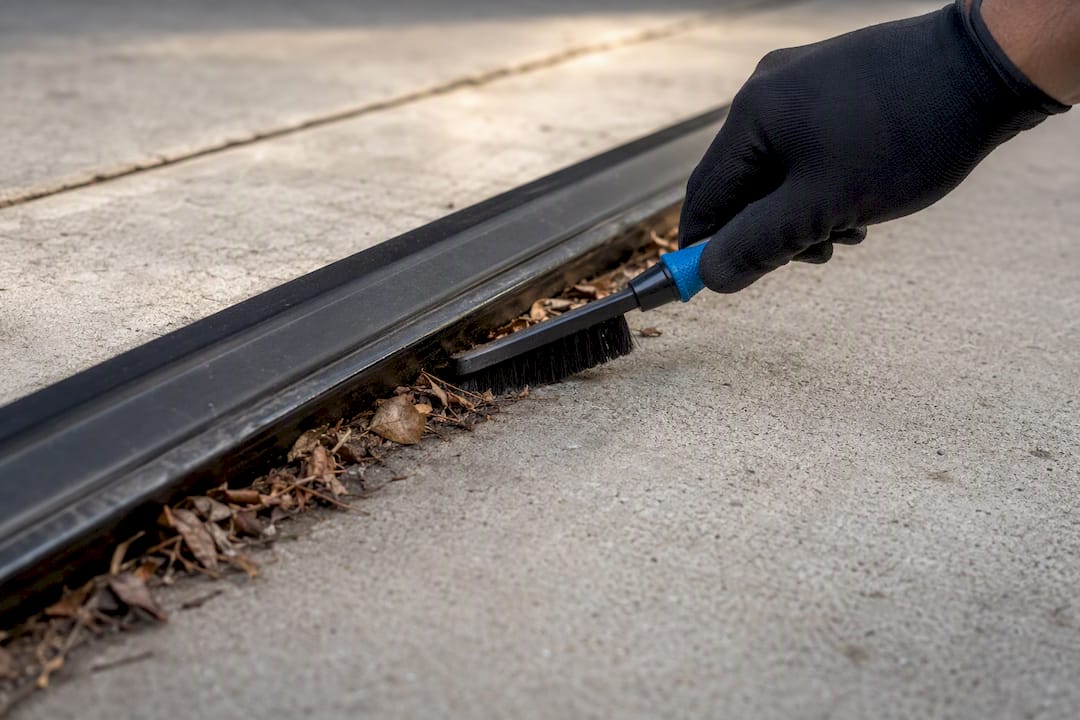
- Drainage should direct water away from the gate line, not toward it. A trench drain across the base of a slope, angled fall in the paving, or a simple gravel soak away can stop silt building up in a track or washing out a footing over a wet Victorian winter.
- Corrosion protection matters more on sites with runoff or coastal exposure. Galvanised steel, marine-grade fixings, and powder coating designed for the exposure level all pay for themselves over a decade.
- Hand-test before automating. Push the gate through its full travel by hand first. If it binds, drags, or needs muscle to shift, fix that mechanically before fitting a motor. A stronger operator masking a mechanical fault is how gates fail early, not a solution to one.
Pro Tip: If you're planning any paving or widening work around the gate line at the same time, sort the civil work first. Adjusting a driveway's paving or grading after a gate's installed usually means redoing part of the footing anyway.
Your pre-install checklist: what to nail down before hiring anyone
Before you ring an installer, get these six things straight in your own head:
- Slope axis — does the grade run across or along the gate's travel path?
- Grade percentage — measured, not guessed.
- Run-back space — clear and measured on the swing or slide side.
- Gate weight and material — heavier wrought iron gates need bigger footings and stronger operators.
- Budget — cantilever and telescopic systems generally cost more than a basic tracked slider.
- Automation needs — mains or solar, expected daily cycles, and any access control integration.
Red flags in a quote: a fixed price given before anyone's measured your slope, no mention of footing depth or drainage, or a motor spec that doesn't reference duty cycle at all. Ask directly about warranty terms, expected maintenance intervals, and what happens to the footing design if your soil turns out to be softer than expected.
A DIY build can work for a simple fixed gate on a gentle, along-axis slope. Anything involving automation, a cross-axis grade, or heavy cantilever fabrication is worth a proper site survey. Community builds show plenty of clever manual workarounds, but they consistently point back to professional input once a motor enters the picture.
What 30 years of sloped installs actually teaches you
Victorian Gate Automation has spent more than three decades fabricating and installing gates across sites that would make a standard catalogue gate useless: steep rural driveways, split-level suburban blocks, and everything with an awkward cross-fall in between. The recurring pattern is simple. A swing gate that's been dragging on the low side for years gets fixed with a rising hinge retrofit and a rebuilt footing. A tracked slider that keeps jamming with leaf litter gets swapped for a cantilever system with no ground rail to clog.
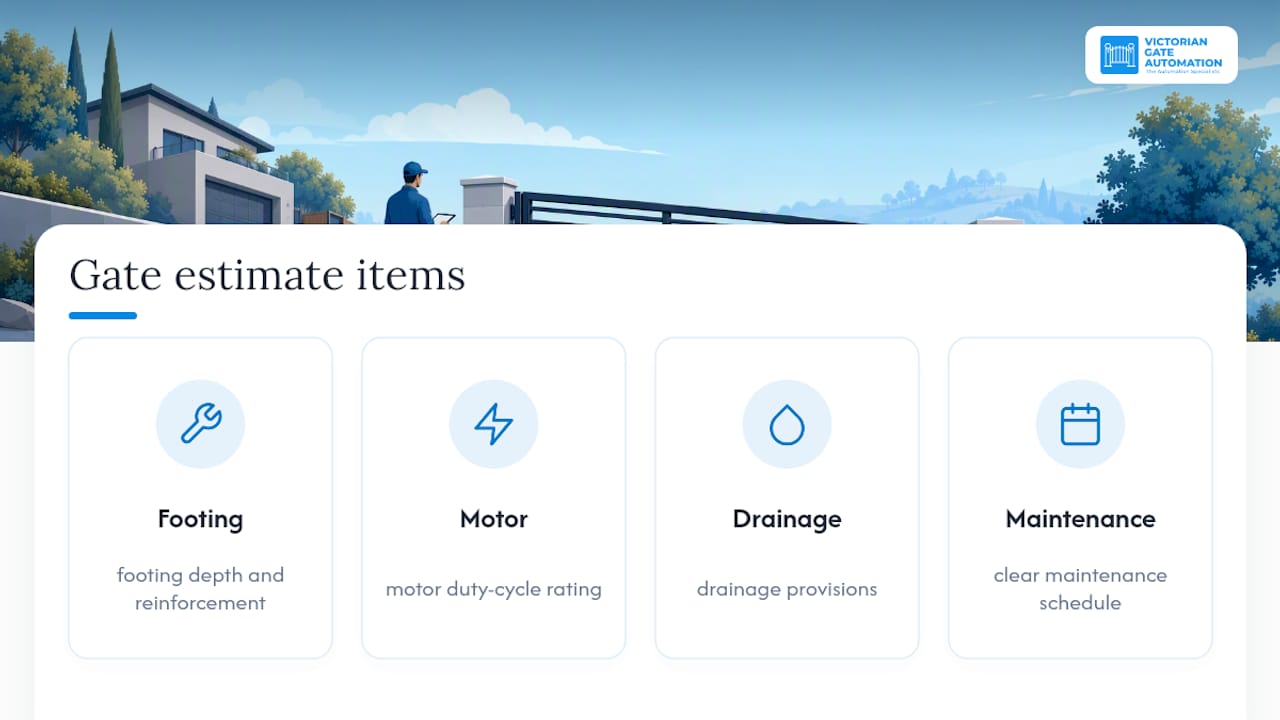
A properly delivered quote should itemise footing depth and reinforcement, motor duty-cycle rating, drainage provisions, and a clear maintenance schedule, not just a headline price for "a gate."
Why site assessment beats gate shopping every time
Most advice on this topic starts with gate styles and treats the slope as an afterthought. That's backwards. The slope axis and the available run-back space decide which gate families are even viable, long before anyone talks about wrought iron scrollwork or colour finishes. Get the site assessment wrong and no amount of motor power fixes it.
The overrated part of most conversations about sloped gates is the motor. Homeowners fixate on horsepower and torque numbers, assuming a stronger operator solves any mechanical problem. It doesn't. A binding hinge, an out-of-true track, or a footing that's slowly shifting will beat a powerful motor eventually, usually within a couple of years, not decades.
What deserves more attention is drainage. It's the least glamorous part of any sloped install and the part most likely to get skipped when a budget's tight, yet it's also the most common root cause of gates that start dragging, jamming, or drifting out of alignment after the first proper wet season. If you take one thing from this article, measure your slope axis honestly and put drainage on the same priority tier as the gate itself.
— Rhys
Get a proper site assessment for your sloped driveway gate
If you've read this far, you already know a sloped driveway needs more than a gate picked off a catalogue page. It needs someone who's measured the axis, checked the run-back, and sized the footings and motor to match your actual site, not a generic flat-ground spec. This service gap is filled by custom fabricators who engineer gates specifically for slopes and grades that can be challenging for standard installers.

A first site visit typically covers slope measurement, run-back assessment, and a look at your existing surface and drainage before anything gets quoted. From there you'll get a written proposal covering the footing design, gate material, motor specification and an installation timeframe, so you're comparing an actual engineered solution rather than a ballpark figure. If your driveway has been fighting you for years, start with an automation and access control consultation and get the slope properly assessed before you spend another cent guessing.
Sources
- Sliding gate automation for sloped driveways
- Automatic gate design options for sloped driveways
- Can you install a gate on a sloped driveway?