
The three controls that stop most unauthorised entries are robust gate hardware, access control that enforces inductions, and visible live monitoring with verified operator response. Get these right and you close the gaps that thieves and trespassers actually exploit. Victorian Gate Automation designs and installs the gate hardware and automation piece of that mix for sites across Victoria.
TL;DR:
- Most gate security failures stem from weak hardware and manual sign-in procedures that do not verify induction status or use reinforced posts.
- Automated systems that integrate access control with induction verification can prevent non-compliant workers from entering and significantly reduce buddy-punching risks.
- Mobile cameras and surveillance trailers with live operator monitoring deter theft more effectively than static cameras alone, especially during early phase site development.
- Installing robust gate hardware, security procedures, and surveillance typically takes several weeks, emphasizing the need for early site survey and planning.
- High-value or high-traffic sites benefit from live monitoring and lock-down protocols, but lower-risk sites can rely on hardware and basic access control for cost-effective security.
Table of Contents
- What is construction site gate security?
- Which access control system suits a construction gate?
- How do you add cameras and monitoring to gate access?
- How installation and maintenance work in practice
- What to specify when you brief a gate installer
- What actually keeps a busy gate secure without slowing the job down
- How Vicgates secures the gate you already have
- Sources
- FAQ
What is construction site gate security?
Construction site gate security is the combination of physical barriers, access-control technology, and monitoring procedures that governs who enters a site and when. It sits at the intersection of construction perimeter security and job site security systems, and it fails most often at the weakest single point: the gate itself, not the fence line either side of it.
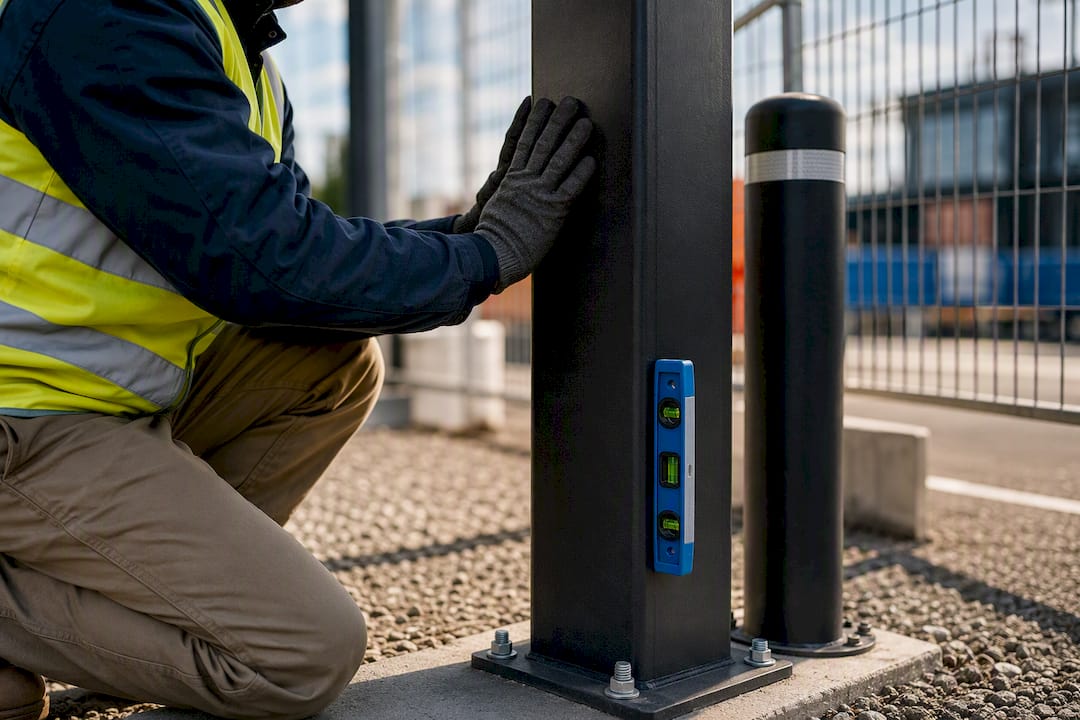
Physical hardening comes first. A continuous fence line with no sagging panels or gaps matters less if the gate post flexes under a shoulder-charge or the latch is a $12 hardware-store bolt. Reinforced posts, anti-ram bollards at vehicle entries, and commercial-grade locking hardware are the baseline. Sliding gates generally resist forced entry better than swinging gates on uneven or sloped sites, because there's no hinge point to attack, but swinging gates open faster for high-frequency pedestrian traffic.
Fail-safe versus fail-secure logic decides what happens during a power cut or fire alarm. Fail-safe unlocks on power loss so people can evacuate; fail-secure stays locked, which protects assets but can trap people inside if it's wired to the wrong exit route. Get a fire engineer or your gate installer to confirm which logic applies to which gate before you sign off on the design.
Procedural controls cost nothing to implement and close a lot of gaps:
- Set fixed delivery hours and refuse unscheduled trucks at the gate, not at the site office.
- Segregate vehicle and pedestrian entries so foot traffic never has to dodge reversing plant.
- Require every visitor to sign in and be escorted, no exceptions for "regulars."
- Log every gate open/close event, even on a manual clipboard, until a digital system is in place.
Temporary fencing and a padlock upgrade can be done in a day for a few hundred dollars. A full gate automation and hardening package, done properly, typically runs several weeks from design to commissioning.
Which access control system suits a construction gate?
Match the technology to the site's phase and traffic, not the other way around. A 20-person residential build and a 300-worker civil project need entirely different hardware.
Mechanical locks and coded keypads still handle low-traffic secondary gates fine, but they can't tell you who actually walked through. RFID cards and mobile credentials solve that: each entry is tied to a person, and you can revoke access instantly when someone's contract ends. Biometric turnstiles and managed kiosks go a step further, cutting out shared cards altogether.
- Turnstiles or secure pedestrian gates suit sites with heavy foot traffic and a fixed workforce, where throughput and an audit trail matter more than speed of installation.
- Vehicle gate automation suits sites where trucks and machinery dominate movement and pedestrian numbers are lower.
- Mobile credentials work well for multi-site contractors who move crews between jobs and don't want physical cards reissued constantly.
- Managed kiosks with face checks deliver the most reliable pedestrian control and produce an audit-ready record of who was on site and when, according to Breadcrumb's turnstile access documentation.
The real value shows up when access control talks to your induction records. Systems that verify licences and induction status at the point of entry stop non-compliant workers walking straight through, and they largely eliminate "buddy-punching," where one worker swipes a card for someone else, as MSite's access control platform demonstrates. The trade-off is integration effort: these systems need a reliable data feed from your induction provider, and outdoor RFID readers need weatherproofing that indoor-rated hardware doesn't have.
How do you add cameras and monitoring to gate access?
Access control tells you who's meant to be on site. Monitoring tells you what's actually happening at the gate right now, and the gap between those two things is where most theft occurs.
Mobile surveillance trailers and pole-mounted cameras are the fastest way to get eyes on a gate before any fixed infrastructure exists. Solar-powered units with cellular connectivity deploy without trenching or cabling, which matters on early-phase sites where mains power hasn't been connected yet, per WCCTV's construction site security overview.
Live monitoring with a verified operator response goes further than a camera that just records. A trained operator watching a live feed can issue an audio warning, escalate to the site manager, or call police before materials leave the site, and that immediate intervention is what actually deters theft in progress rather than just documenting it afterwards, according to ECAM's jobsite security research.
- Pair access control with cameras at every gate, not just the main entrance.
- Automate the induction-to-entry check so the gate physically won't open for an incomplete induction record.
- Build in anti-theft priority relay logic: a confirmed alarm should override any normal access command and lock the gate down, a practice ECAM's security blog flags as commonly overlooked.
Pro Tip: Test your lockdown logic under a simulated power failure before relying on it. A system that locks down perfectly in daylight can behave unpredictably on battery backup at 2am, and that's exactly when someone's testing your fence line.
How installation and maintenance work in practice
Good gate security starts with a site survey, not a catalogue. A specialist needs to know your vehicle loads, expected traffic patterns, and where access control, power, and monitoring equipment will physically integrate before drawing a single gate design.
Sequencing matters more than most site managers expect. Temporary security fencing for sites and mobile monitoring go in first, while the permanent layout is still moving. Permanent gate fabrication and automation come later, once vehicle routes and pedestrian paths are locked in, because redesigning a custom gate around a changed access point wastes both time and materials.
- Schedule quarterly checks on locking mechanisms, hinges, and automation motors, more often in coastal or high-dust environments.
- Confirm battery and solar back-up actually holds charge under load, not just on paper.
- Retest fail-safe and fail-secure behaviour after any electrical or software update.
- Agree a maintenance SLA with response times in writing before you need to use it.
Victorian Gate Automation brings more than 30 years of experience fabricating custom automatic gates and fencing across Victoria, using locally sourced materials and handcrafted construction. That combination of design flexibility and long-standing local manufacturing is worth factoring in when you're briefing a security upgrade rather than buying off a shelf.
What to specify when you brief a gate installer
Hand procurement or your installer a clear spec, not a vague brief, and you'll get fewer change orders later.
- Gate type and locking behaviour: sliding or swinging, fail-safe or fail-secure, and which emergency routes it affects.
- Access control requirements: RFID, mobile credential, or turnstile, plus whether induction checks must gate entry.
- Camera and monitoring integration: fixed, mobile trailer, or pole-mounted, and whether live operator monitoring is included.
- Power and back-up needs: mains, solar, or battery, with redundancy for cellular connectivity if remote.
- Maintenance SLA: response time commitments and scheduled inspection frequency.
Loop in the site manager, WHS officer, your security provider, the gate installer, and the monitoring partner before finalising any of it. Temporary rental fencing and mobile cameras can typically be on site within days; a full custom gate and automation installation runs closer to several weeks once design and fabrication are factored in.
What actually keeps a busy gate secure without slowing the job down
Security that grinds site traffic to a halt gets worked around within a week, usually by someone propping the gate open. Pre-registration and staggered delivery windows keep throughput high without loosening control.
Use low-friction credentials, a card or mobile pass, for regular crew, and reserve stricter checks, ID plus escort, for visitors and subcontractors who aren't on site daily. Physical barriers and a locked gate cover most routine risk. Escalate to live monitoring when the site holds high-value plant or materials overnight, or when theft has already occurred once.
— Rhys
How Vicgates secures the gate you already have
A gate installer builds the physical and automated side of everything covered above: custom gate fabrication, automation, and access-control integration, backed by maintenance once it's installed. If your site needs reinforced posts, a sliding gate with proper fail logic, or automation that talks to your induction system, that's a direct fit rather than a generic add-on.
Experienced fabricators ensure every gate is built to the site, not pulled from a catalogue, using suitable materials and finished to last outdoors. Commercial and construction clients get the same attention to detail as residential jobs, and the wrought iron range shows the finish quality on offer when durability and appearance both matter. For concrete cutting or site preparation work that pairs with a gate upgrade, Vic Sawing Concrete Cutting Melbourne is a local partner worth talking to.
If your site needs a gate that locks down properly, integrates with access control, and holds up under daily traffic, request a site survey through the automation and access-control page and get a design started before your next induction cycle.
Sources
- Construction Jobsite Security | ECAM
- Construction site security solutions | WCCTV
- Construction site access control | MSite
FAQ
What's the fastest way to secure a construction gate?
Temporary security fencing paired with a mobile solar camera unit can be deployed within days, well before permanent gate hardware and automation are installed.
Do I need access control if I already have a locked gate?
A locked gate stops casual entry but can't tell you who's on site or block a non-compliant worker; access control that checks inductions closes that gap.
Can Vicgates integrate access control with an existing gate?
Vicgates designs and installs custom automation and access-control integration for both new and existing gates, based on a site survey of your specific layout.
What causes most gate security failures on construction sites?
Weak hardware (flimsy latches, unreinforced posts) and manual sign-in processes that don't verify inductions are the two most common failure points.
Should every site gate have live monitoring?
Not necessarily. Live monitoring earns its cost on sites holding high-value plant or materials overnight; lower-risk gates are often well served by solid hardware and access control alone.