
Yes, regular professional maintenance prevents failures, keeps safety devices working, and extends the life of your automatic gate. A full service checks the mechanical parts, the electrics, and the safety systems together. Owners can run a few basic checks themselves, but anything electrical, or anything involving force settings, needs a qualified technician.
TL;DR:
- Regular professional maintenance is essential for preventing failures, especially in high-cycle or coastal settings where corrosion accelerates wear.
- A full service should routinely include mechanical, electrical, and safety system checks, with a focus on battery health, alignment, lubrication, and corrosion prevention.
- Scheduled inspections are typically necessary every year for light domestic gates and every six months or every 10,000 cycles for commercial or heavily used gates.
- Basic self-checks, such as testing power, batteries, manual release, and sensors, can resolve common issues like photocell misalignment before calling a technician.
- Choosing an experienced technician with proper insurance and a clear scope of work ensures thorough documentation and reliable repairs or replacements.
Table of Contents
- What does a full automatic gate service include?
- How often should you service an automatic gate?
- Simple checks to try before calling a technician
- How to choose a technician for gate servicing
- Why 30+ years of fabrication experience changes maintenance outcomes
- A practitioner's take on preventative servicing
- Book a gate service with Victorian Gate Automation
- Sources
- FAQ
What does a full automatic gate service include?
A proper service moves through three layers: mechanical, electrical, and safety. Skip one and you're only half-checking the system.
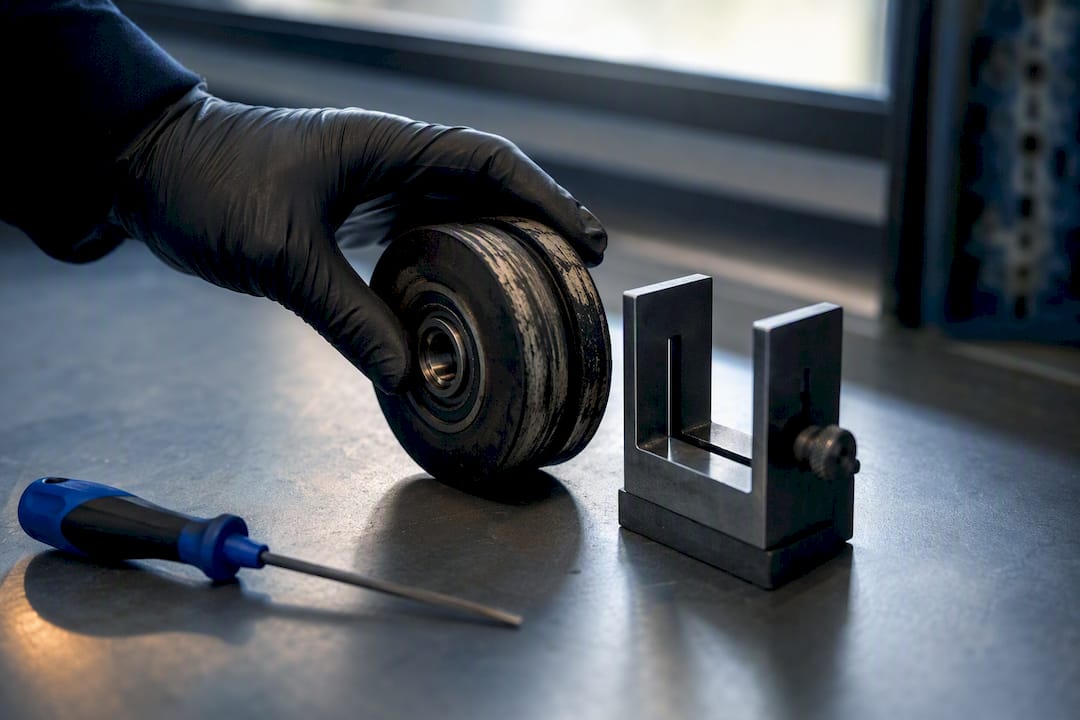
On the mechanical side, a technician looks at hinges, rollers, tracks, and gate balance, checking wheel wear and alignment as they go. A gate that drags on one side or rattles on its track is usually the first sign something's shifted out of alignment. The electrical side covers the control unit, wiring, fuses, limit switches, and the backup battery and charger. Degraded batteries are one of the most common causes of outage related failures, which is why a good technician tests charge voltage rather than just glancing at the unit.
Safety devices get their own scrutiny: photocells, safety edges, and any monitored entrapment protection need physical testing, not just a visual check. Some manufacturer guides call for greasing bearings and linkages roughly every six months or 10,000 cycles, alongside the same-interval battery and safety-device check.
A thorough visit also covers:
- Lubrication of designated fittings with a proper gate grease, never a general-purpose spray that attracts dust or degrades seals
- Corrosion checks on brackets, fixings, and exposed hardware
- Water ingress and insect nest checks inside the control box (surprisingly common in outdoor-mounted units)
- A written service log noting cycle count, date, and any parts replaced
Pro Tip: Ask your technician to leave a copy of the service log with you, or check the sticker inside the control box. A property with three years of logged cycles is far easier to diagnose than one with no history at all.
How often should you service an automatic gate?
A gate used lightly at a suburban home needs less attention than one opening 40 times a day at a warehouse. That difference should set your schedule, not a generic annual reminder.
As a baseline, light domestic use suits an annual inspection with a minor service. Emergency call-outs sit outside that schedule entirely, triggered by a fault rather than the calendar.
A few things should push you to service more often than the baseline:
- Coastal properties, where salt air accelerates corrosion on hinges and fixings
- Gates with visibly high cycle counts, such as shared driveways or commercial entries
- Any site with recurring faults, even minor ones, since repeat issues usually point to a root cause that hasn't been fixed
On cost, expect a scheduled visit to run cheaper than an emergency call-out, largely because of travel timing and the urgency premium technicians build into after-hours work. Parts like batteries, capacitors, and photocells add to the bill, and labour time varies with how much disassembly is needed. Safety re-certification, where entrapment devices are formally tested and documented, is worth paying for separately if it isn't already bundled in.
Preventative servicing is almost always the cheaper path over a few years. A scheduled visit that catches a worn roller before extensive damage occurs can be more cost-effective than replacing a motor worn down by prolonged operation against a jammed track.
Simple checks to try before calling a technician
Before you book anyone, there are a handful of safe checks worth running yourself; for detailed guidance on maintenance scheduling and contractor workflows, see Property Management Workflow Efficiency Tips That Work. None of them require opening a control panel.
- Check the power supply. Confirm the dedicated breaker hasn't tripped, and isolate power safely if you need to inspect anything physical.
- Swap the batteries. Replace the remote and keypad batteries, then retest. It sounds obvious, but it accounts for a real share of "the gate's dead" calls.
- Test the manual release. Disengage the motor and push the gate by hand. If it moves freely, the fault is likely electrical. If it's jammed or dragging, look at the track and hinges first.
- Clean and align the photocells. Wipe the lenses and check they're facing each other squarely, then briefly obstruct the beam to confirm the gate responds.
- Listen to the motor. A hum with no movement, or a stall under light load, points to a mechanical or electrical fault. Stop there and call a technician.
Photocell misalignment and dirt are consistently among the most frequent reasons a gate refuses to close, so that check alone resolves a surprising number of service calls. A nine-point diagnostic sequence covering power, batteries, manual release, sensors, and limit switches clears many faults before a tech even needs to attend.
Never open a sealed control panel or attempt mains-level repairs yourself. It's not just a safety risk, it can also void warranty cover on the unit.
How to choose a technician for gate servicing
The right technician leaves you with documentation, not just a working gate. That distinction is worth checking before you book.
Ask about their experience with your gate type specifically, sliding, swinging, or industrial, and request proof of past installations if you haven't used them before. Confirm they carry appropriate electrical and public liability insurance, since gate work often touches mains wiring and moving mechanical loads.
Before the visit, get a written scope: what's inspected, what's tested, and what triggers a replacement rather than a repair. A service sticker and log inside the control box should be standard, not an upsell.
Specifically ask whether they test entrapment protection devices and whether they'll supply documentation of that test. Also ask about parts warranty, labour warranty, and their response time for emergency call-outs, since that's the detail that matters most the day your gate actually fails.
Pro Tip: A vague scope of works, no written quote, or pressure to replace parts without a proper diagnosis are all warning signs. A technician confident in their work will happily put the scope on paper.
Why 30+ years of fabrication experience changes maintenance outcomes
Rhys has spent more than 30 years working on gates through Victorian Gate Automation, a family-owned business building custom automatic gates and fencing across Victoria. Gates fabricated and balanced in-house, using locally sourced materials, tend to need less corrective maintenance down the track, because alignment issues get caught at the build stage rather than discovered years later on a service call.

A practitioner's take on preventative servicing
Scheduled servicing beats reactive repair almost every time, and the maths backs that up. Watch your gate closely after major storms or heavy leaf fall, since debris in the track is a common trigger for sudden faults. If a gate starts behaving oddly, even slightly, get it inspected rather than waiting for it to fail completely.
— Rhys
Book a gate service with Victorian Gate Automation
Vicgates is the practical option for automatic gate maintenance across Victoria: one team handles the inspection, the preventative service, and the repair, instead of you juggling a fabricator for the gate and a separate contractor for the electronics.

Vicgates covers full inspections, preventative servicing, repairs, battery and parts replacement, and safety device testing, alongside custom fabrication for anything that needs replacing rather than repairing. Booking a service visit starts with a quote request, where you outline the gate type, usage pattern, and any faults you've noticed, and a technician scopes the visit before turning up.
For homeowners, the residential services page covers typical maintenance and aftercare arrangements. Property managers and commercial sites with higher cycle counts are better served through the commercial services page, where scheduling tends to follow cycle counts rather than the calendar. If your gate needs automation upgrades alongside servicing, the automation and access control page covers what's involved.
Get in touch through Vicgates to book an inspection and get a written scope before any work starts.
Sources
- Automatic gate stopped working? 9 quick checks before calling a tech — Fantastic Fence
- Maintaining your AutoGate vertical pivot gate system — AutoGate maintenance PDF
FAQ
How Often Should Electric Gates Be Serviced?
Light domestic gates generally need an annual inspection, while heavy domestic or commercial gates should be serviced every six months or roughly every 10,000 cycles, per manufacturer maintenance schedules.
How Do You Lubricate an Automatic Gate Properly?
Apply grease to designated bearings, hinges, and linkages rather than spraying general lubricant across the whole mechanism, since dust-attracting sprays and seal-damaging products cause more wear than they prevent.
What Are Common Problems With Electric Gates?
Photocell misalignment, worn rollers, degraded backup batteries, and jammed tracks account for most everyday service calls, and most are picked up early in a routine service.
How Much Does It Cost to Service an Electric Gate?
Scheduled maintenance visits are cheaper than emergency call-outs, since they avoid urgency premiums and travel surcharges. A reputable service provider should give a written quote before any work starts, so you know exactly what's included.
When Should I Call a Professional Instead of Checking It Myself?
If the motor hums without movement, stalls under light load, or you find any fault involving the control panel or wiring, stop and call a technician rather than attempting a repair yourself.