
Yes. Most swing, sliding and cantilever gates can be retrofitted with an automation system without full replacement, provided the frame is structurally sound, the hinges or track sit true, and power can reach the site. The four gatekeepers are gate condition and weight, hinge or track alignment, pillar and fixing strength, and access to power. If you're unsure, take photos and rough measurements and book a site survey before you buy anything.
TL;DR:
- Retrofitting most swing, sliding, and cantilever gates is feasible if the structure is sound, hinges or tracks are aligned, and power is accessible.
- Proper site preparation, including measuring gate weight, photographing key details, and confirming power availability, reduces installation surprises.
- Selecting the right motor type is crucial; ram actuators suit solid pillars on swing gates, while rack systems work best for level, firm ground sliding gates.
- Installation is streamlined when off-site fabrication is prioritized and a site survey confirms feasibility, with safety devices tailored to gate environment.
- Regular maintenance of lubrication, track condition, and battery health prolongs system reliability, with most issues traceable to rushed or incomplete commissioning.
Table of Contents
- How do I know if my gate type suits retrofitting?
- What should you check before booking an installer?
- Which motor and power setup suits your gate?
- What actually happens on installation day?
- What safety devices and standards should you expect?
- How much does a gate automation retrofit cost and take?
- What maintenance does an automated gate need?
- Why trust this guide on gate retrofits?
- When does it make more sense to replace than retrofit?
- How Vicgates handles your gate retrofit
- Sources
- FAQ
How do I know if my gate type suits retrofitting?
Gate type matters less than condition, but it still shapes the job. Here's how the three common configurations stack up.
- Swing gates are the easiest retrofit candidates. A single leaf needs one ram or arm and a solid pillar on the hinge side; a double leaf needs two synchronised motors and matched hinge geometry on both sides, which is where a lot of quotes go wrong if the pillars aren't equally strong.
- Sliding gates depend heavily on the track. A worn guide channel, rusted rollers, or a rack that's bent from years of manual shoving will undermine even a good motor, so the track condition matters more than the gate leaf itself.
- Cantilever gates need a level, compacted ground run and enough clearance for the counterweighted section, plus roller carriages in good order.
Edge cases add cost rather than rule out automation entirely. Warped timber frames, hollow brick piers, unusually heavy steel leaves, and offset hinges (common on older farm gates) usually need custom brackets or reinforcement rather than an off-the-shelf mounting kit. According to Gatomate's Australian retrofit guide, structural condition, hinge alignment, pillar quality and power access are the real determinants of whether a gate is retrofit-ready, not the gate style itself.
What should you check before booking an installer?
A bit of homework before the first phone call gets you accurate, comparable quotes instead of a guessing game. Run through this list yourself.
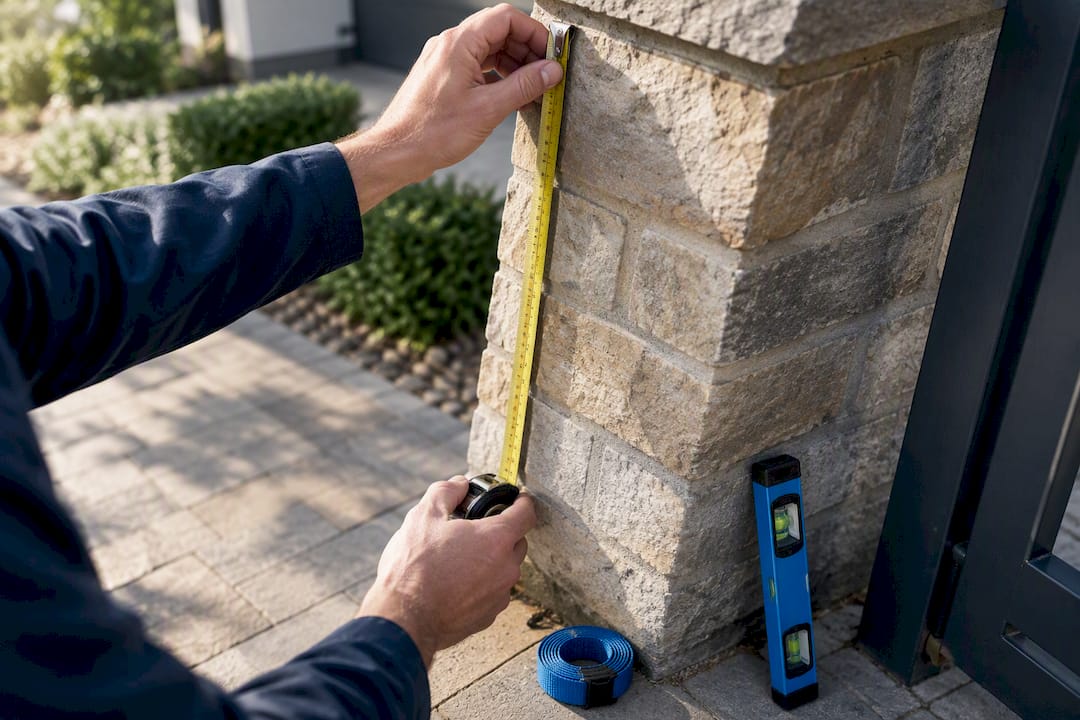
- Measure the leaf length and estimate weight, or simply note if it feels unusually heavy when you swing or slide it by hand.
- Photograph the hinge detail (swing gates) or the track and rollers (sliding gates), plus the pillar or post material, brick, steel, timber or concrete.
- Record the opening arc for swing gates and note any slope, dip or obstacle along the path, since these affect motor mounting and where safety sensors can go.
- Confirm your nearest power source. Check how far the meter box or an existing outdoor circuit is from the gate, and whether a 230–240V feed is realistically achievable.
- Note how often the gate opens each day. A household gate cycling four times a day has very different motor and battery needs to a shared driveway used by six households.
A site survey checklist matters here because hinge offsets and mounting geometry, not gate type alone, often decide whether a job is straightforward or needs custom brackets, according to Autogate Services' guidance on automating existing gates.
Pro Tip: Send your installer photos and measurements before the site visit, not on the day. It lets them flag likely issues (a leaning pillar, an undersized rack) in advance, so the actual visit is about confirming detail rather than discovering problems.
Which motor and power setup suits your gate?
Match the drive to the gate, not the other way around. Getting this wrong is the single biggest cause of premature motor failure and warranty callbacks.
- Ram or linear actuators suit single swing leaves with a solid pillar to bolt against; they push and pull in a straight line and need a pillar that can take that load without flexing.
- Articulated arms handle swing gates where the pillar is set back from the hinge or where full 90 to 120 degree opening is needed in a tight driveway.
- Sliding gate drives almost always use a toothed rack and pinion system bolted along the bottom rail; the ground needs to be firm and level enough that the rack doesn't flex under the gate's weight.
- Hardwired 230 to 240V mains power is the most reliable option long term, but it usually means trenching a cable run from the meter box to the motor.
- 24V low-voltage kits run cooler and are inherently safer to install and touch, which suits gates near garden beds or areas with foot traffic.
- Battery with solar top-up cuts trenching to almost nothing but needs proper capacity planning against your daily cycle count, particularly for shared driveways.
Choosing a motor and bracket pair with a safety margin over expected load, commonly around one and a half times the torque or thrust actually needed, and bolting brackets to sound masonry or steel rather than crumbling render, avoids the eccentric loading that wears drives out early, according to Valen Tech's guide on converting manual gate valves to electric operation. If you're tempted by a smart integration, robust local position feedback, through end limits, monitored sensors or encoders, matters more than the app, according to the ESPHome gate controller project on GitHub; cloud-only state tracking is where DIY setups tend to fall over.
What actually happens on installation day?
Most of the disruption people worry about happens off-site, not on it, if the installer has done their homework.
- Site survey first. Structural checks, measurements and a power verification confirm the plan before any hardware arrives.
- Off-site fabrication. Brackets, adapter plates and any custom metalwork get made in a workshop, which is what actually keeps the on-site time short, Gatomate notes.
- On-site fitting. Motor mounting, rack fitment or arm attachment, trenching and cable runs, then fitting photocells and warning devices.
- Commissioning. Limit switches, torque and force settings, obstacle testing, and a written commissioning report before handover.
To keep disruption minimal, ask your installer about scheduled work windows, driveway protection, and a temporary access plan for the hours the gate is out of action.
What safety devices and standards should you expect?
Safety devices should match your gate's actual danger points, not tick a generic box. A shared pedestrian path needs photocells; a gate that closes near a wall or post needs pressure-sensitive edges where a pinch risk exists; every install needs monitored controls and a manual release that still works if power fails.
- Photocells across any pedestrian or vehicle path the gate crosses.
- Pressure-sensitive edges at pinch points, particularly on the leading edge of sliding gates.
- Monitored control logic that can detect a fault state, not just open or closed.
- A tested manual release accessible without tools in a power outage.
IEC 60335-2-97 sets out the safety requirements for power-operated gates, and its core point is that device selection has to match the layout and operating environment, then get verified during commissioning rather than assumed from a checklist. Commissioning should include a full obstacle test, recorded limit positions, and documented force settings within the motor's rated thresholds.
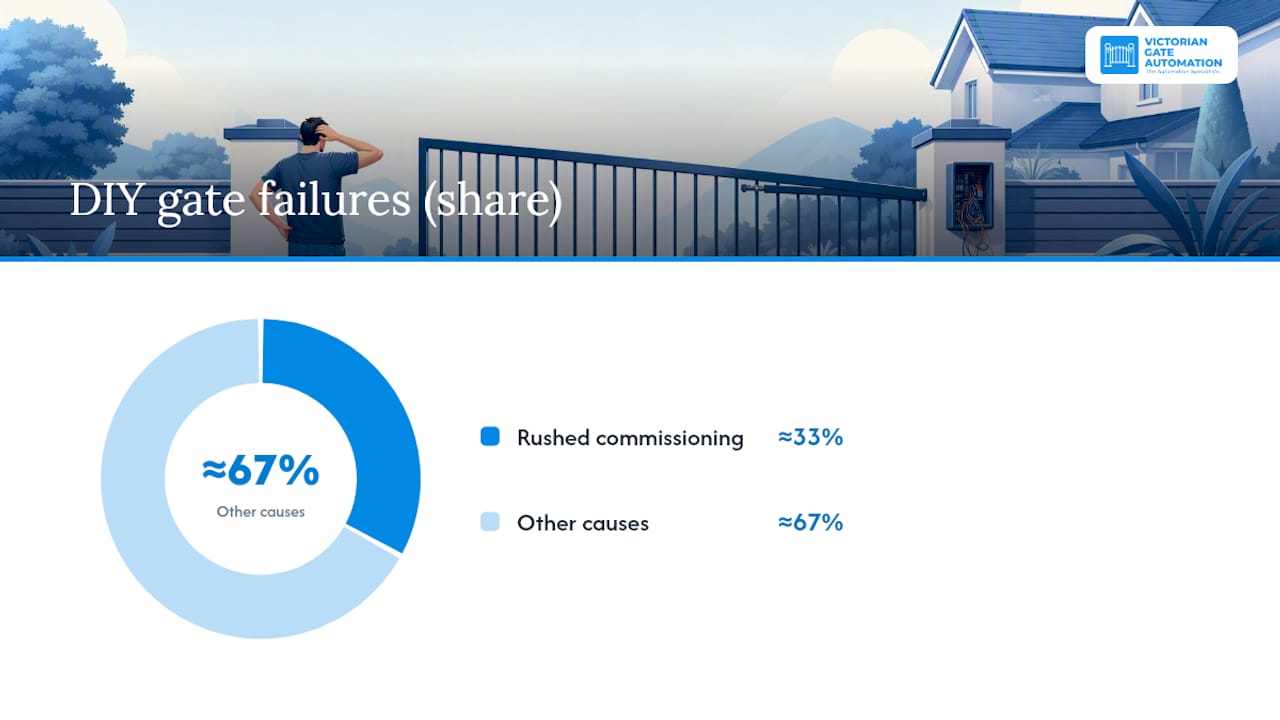
Roughly a third of home automation failures documented in DIY gate projects trace back to skipped or rushed commissioning steps, particularly around obstacle detection and force limits, based on retrospectives from the Automated Sliding Gate V2 project. Local position feedback also matters if you're adding smart home control later, since it stops the system reporting a false open or closed state.
Pro Tip: Ask your installer to show you the obstacle test in person before you sign off, not just hand you a certificate. A gate that stops cleanly against light resistance is doing its job; one that shudders or keeps pushing needs its force setting adjusted before you use it around kids or pets.
How much does a gate automation retrofit cost and take?
Costs scale with complexity more than with gate size alone.
- Simple swing gate retrofit: lowest cost band, typically a single ram or arm with straightforward mains power access.
- Sliding gate with rack: mid-range, driven up by rack length, ground preparation and often a longer cable run.
- Heavy-duty or custom solutions: highest cost band, where pier strengthening, custom brackets or industrial-grade drives come into play.
The main cost drivers are motor class, how much trenching and cabling is needed, whether brackets or pillars need reinforcing, and the safety devices and commissioning required to do the job properly. A realistic timeline runs from site survey through off-site fabrication to a half-day or full-day on-site install and commissioning, with delays usually coming from unexpected pillar repairs or power runs longer than first estimated. When comparing quotes, ask each installer to itemise motor class, cabling scope, bracket work and what's included in commissioning, so you're comparing the same job twice, not two different jobs.
What maintenance does an automated gate need?
- Check lubrication on hinges, rollers and racks every six months, and inspect fasteners for movement or corrosion.
- Watch for rack wear or roller misalignment on sliding gates, both signs the track needs attention before the motor takes the strain.
- Test battery condition on solar or battery-backed systems each season, particularly before storm periods when mains power is more likely to drop out.
Most long-term faults, jerky starts, relay wear, motors straining, trace back to rushed commissioning rather than the hardware itself, according to the Automated Sliding Gate V2 retrospective. An annual check should cover force settings, limit positions and physical wear, and it's worth asking what's included in any warranty or service agreement before you sign.
Pro Tip: Book your first professional service at the twelve-month mark even if nothing seems wrong. Small alignment drift is cheap to fix early and expensive once it's worn a rack or chewed out a bracket.
Why trust this guide on gate retrofits?
Victorian Gate Automation has spent over 30 years designing, fabricating and installing custom gates, fencing and access control across residential and commercial sites, work you can see more of on the Vicgates homepage. The business handcrafts brackets and hardware in-house using locally sourced materials, which matters for the custom fitting work most retrofits eventually need.
Book a site survey and expect a straight answer on feasibility, a written scope covering brackets, power and safety devices, and a quote that separates fabrication from on-site labour.
When does it make more sense to replace than retrofit?
Retrofit is the sensible call when the structure is sound and you need minimal disruption. Replacement earns its cost when pillars are failing, the gate leaf is badly warped, or you're prioritising decades of reliability over a quick fix. If you're on the fence, a proper site survey settles it faster than guessing.
— Rhys
How Vicgates handles your gate retrofit
Vicgates is the practical alternative to guessing your way through a DIY kit or a generic motor off the shelf. Over 30 years, the team has built its own brackets and mounting hardware in-house rather than relying on stock parts, which matters most on the awkward jobs, offset hinges, hollow piers, heavy custom leaves, that generic retrofit kits struggle to fit properly.

A consult starts with what you've already read here: photos of your hinges or track, a rough measurement of the leaf, and a note on where your nearest power source sits. From there, Vicgates scopes the motor class, bracket work and safety devices your gate actually needs, not a one-size list. If your gate is a straightforward residential swing or slide, start with the residential gates and automation page to request a quote. Heavier commercial or industrial gates are better scoped through the commercial and industrial automation service. Either way, the next step is simple: send through your photos and measurements and get a site survey booked.
Sources
- ChristopherGriffin/esphome-gate-controller
- Can You Motorise an Existing Gate? The Complete Australian Retrofit Guide
FAQ
Can existing gates be automated?
Yes, most swing, sliding and cantilever gates can be automated without replacing the gate itself. The main limits are structural condition, hinge or track alignment, pillar strength and access to power, as outlined in Gatomate's retrofit guide.
Can I convert my existing gate to an automatic gate?
Yes, provided a site survey confirms the frame, hinges or track and nearby power access can support a motor and safety devices. Photograph your hinge detail or track condition and estimate the leaf weight before requesting a quote so installers can assess feasibility properly.
How much does it cost to automate an existing gate?
Costs vary by complexity: a simple single swing gate retrofit sits at the lower end, sliding gates with a rack system cost more due to ground preparation and cabling, and heavy-duty or custom jobs cost the most because of bracket work and pier strengthening. Vicgates doesn't publish fixed retrofit pricing online, so request a quote through the residential gates page for a scoped price.
How much does it cost to motorise a gate?
Motorising a gate costs more when it needs trenching for mains power, custom brackets for non-standard hinges, or heavier-duty drives for large or heavy leaves. A low-voltage or solar-battery setup can reduce trenching costs but needs proper capacity planning against how often the gate cycles each day.